What Is Spinal Decompression Therapy? And How Does It Help Your Back?

Spinal decompression is a non-surgical approach used to treat spinal disc issues by gently stretching the spine in a controlled manner. This repetitive motion encourages the flow of water, oxygen, and essential nutrients back into the discs, supporting natural healing and reducing pressure.
During the session, the patient lies face down on a specialized table that bends and lengthens to create spinal elongation. The practitioner applies precise, hands-on guidance at targeted levels of the spine to focus on specific discs. This hands-on technique allows real-time adjustments based on muscle response, helping prevent spasms and improve comfort.
This personalized, responsive method is a key part of spinal decompression therapy in Brampton, where treatment is adapted to each patient’s condition for more effective and targeted results.
Conditions That Spinal Decompression Treatment Can Help
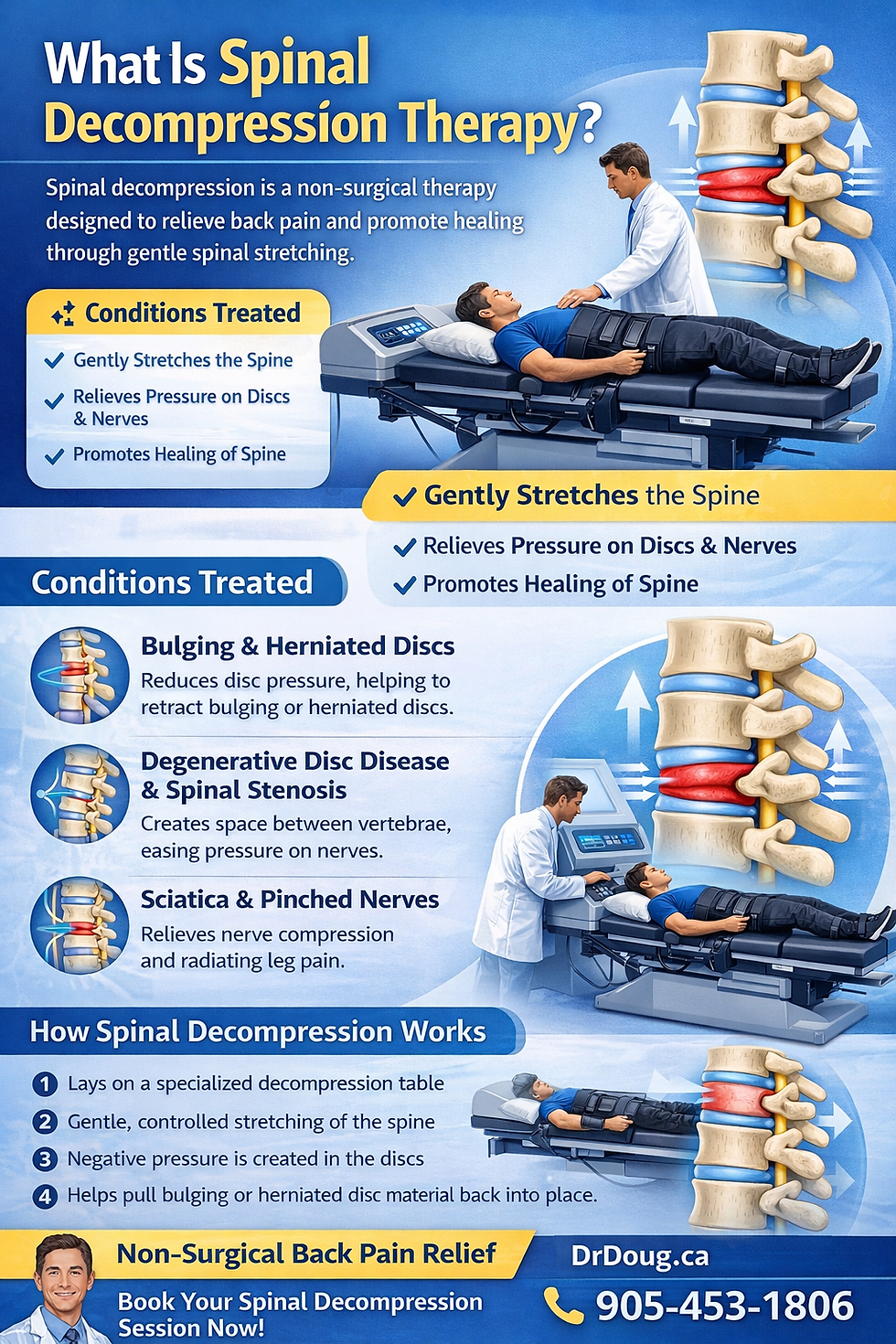
Spinal decompression treatment can be used to address a range of spinal conditions effectively. Here is a closer look at the most common ones:
Bulging Discs: Causes, Symptoms, and How Decompression Helps
Bulging discs are one form of disc injury. This condition is usually caused by repetitive strain to the spine and discs from things such as lifting or vibration over an extended period of time. The gelatinous centre of the disc begins to tear through the outer ligaments, but stays contained, leading to the bulge.
This causes a thinning of the disc. The bulging causes pain and inflammation in the tissues near the spine. Eventually, this condition can lead to arthritis in the spine. Bringing nutrients to the bulging disc through the action of decompression helps it recover.
Herniated Discs: When the Disc Breaks Through and Presses on a Nerve
Herniated discs happen when the gelatinous inside of the disc tears through the outer ligaments and may then press on a nerve, causing leg pain as well as back pain. The herniated disc also causes spinal muscles to spasm or seize up, which only puts more pressure on the disc.
Spinal decompression opens up the space between the vertebrae, helping to move the disc back into position and away from the nerve. It also stretches the small but highly innervated muscles near the spine to increase the space between the vertebrae and bring relief to the painful back and leg.
At Dr. Doug's clinic, every spinal decompression treatment is customized to the individual, combining precise hands-on technique with a deep understanding of how each patient's spine responds to care.
Spinal Stenosis: A Degenerative Condition That Decompression Can Ease
Spinal stenosis is a severe, degenerative condition of the spine. The discs have bulged and eventually dried out, creating severe disc thinning. This places a lot of pressure on the supporting joints of the spine, causing the cartilage to wear out, further thinning the disc space and creating bone spurs.
The space where the nerve passes out of the spine becomes small, and the nerve root gets squeezed. This causes pain and fatigue in the back and leg muscles. Spinal decompression relieves pressure on the nerve by opening the part of the spine through which it passes. It also stretches small muscles that go from one vertebra to the next, reducing pain and giving the spine better mobility.
How Does Spinal Decompression Support Disc Health?
Intervertebral discs are a common source of back pain. They act as cushions between each vertebra, absorbing shock and allowing movement of the vertebrae front to back, bending side to side, and turning in either direction.
Generally, these are powerful structures, but they are still susceptible to injury from repetitive strain, poor posture, or sudden trauma. When an injury occurs, the disc can lose its ability to self-repair, often leading to chronic inflammation and a loss of mobility. Spinal decompression is a non-surgical method that works well to create negative pressure in the disc space. This helps pull nutrients back inside to speed up recovery. However, this treatment is usually not recommended for people with advanced osteoporosis, metal implants in the spine, or recent spinal fractures, because these issues can weaken the spine and make the stretching unsafe. Similarly, those with severe spondylolisthesis or spinal tumors should consult a specialist to determine if alternative therapies are more appropriate for their specific health profile.
Don't Wait for Pain to Get Worse: Book Your Spinal Decompression Session Today.
Back pain does not have to be your "normal." At our clinic, we use non-surgical spinal decompression to help you heal faster and move better without the need for invasive procedures. Finding the best chiropractor in Brampton means finding a practitioner who understands the unique mechanics of your spine and offers personalized care that actually works.
You can reach out to our staff directly through our Contact Us page or secure your spot immediately by visiting our Book an Appointment page.
Frequently Asked Questions
1. What is spinal decompression therapy?
Spinal decompression therapy is a non-surgical treatment that gently stretches the spine to relieve pressure on discs and nerves, helping reduce back pain and support natural healing.
2. How does spinal decompression help back pain?
It creates negative pressure in the spine, which helps reposition bulging or herniated discs, reduces nerve compression, and improves nutrient flow to promote recovery.
3. Is spinal decompression therapy safe?
Yes, spinal decompression therapy is generally safe when performed by a trained professional. However, it may not be suitable for people with severe osteoporosis, spinal fractures, or certain spinal conditions.
4. What conditions can spinal decompression treat?
Spinal decompression therapy is commonly used for bulging discs, herniated discs, sciatica, spinal stenosis, and chronic lower back pain.
5. How many spinal decompression sessions are needed?
The number of sessions varies depending on the condition, but most patients require multiple sessions over several weeks for effective and lasting results.


Comments