How Custom Orthotics Improve Posture and Reduce Back Pain
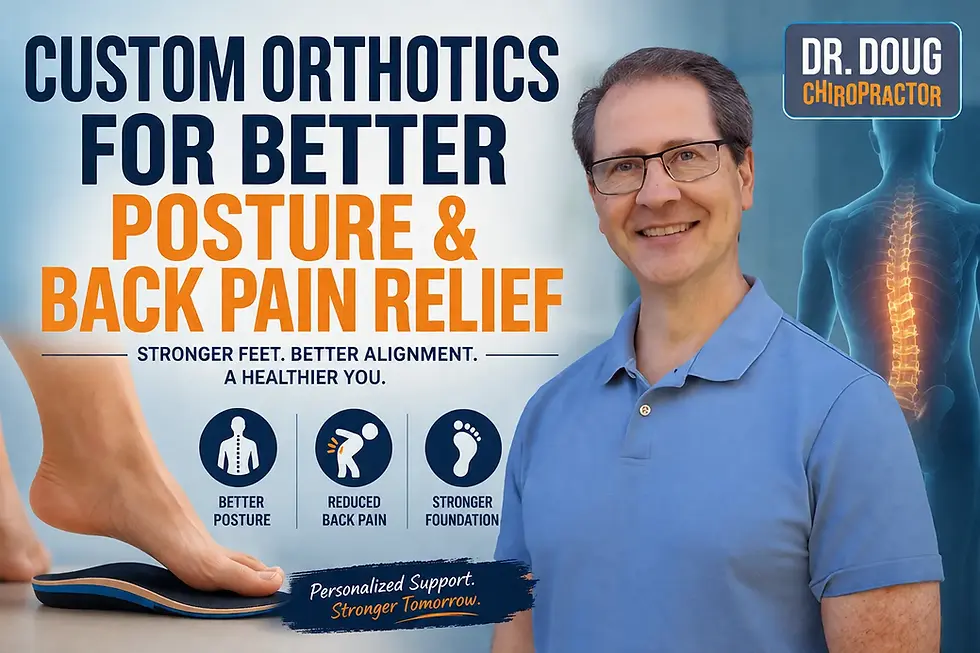
Your feet are the foundation of your body. Every step you take sends forces through your feet, ankles, knees, hips, and spine. When your feet do not move efficiently, the effects can travel upward through the entire body and may contribute to discomfort in areas that seem unrelated to your feet.
If you experience ongoing foot, leg, hip, or lower back pain, Custom Orthotics in Brampton may help address the way your feet move and support your body. Many people only think about orthotics when they have foot pain. However, the way your feet function can influence your posture, balance, walking pattern, and the amount of stress placed on your joints. A professional examination can help determine whether custom orthotics are appropriate for your individual needs.
How Your Feet Can Affect Your Posture and Back
Custom foot orthotics are an important component of treating foot pain. However, the benefit of orthotics doesn't stop at the ankle. When people stand, the arch of the foot can flatten out or "roll in." This causes stress on the muscles and joints of the sole, the middle part of the foot, and the ankle. When the foot rolls, it also causes some twisting of the tibia (shin bone), which causes the knee to twist in toward your midline. This can produce a position of that leg that makes it seem as if it were shorter than the other one. This makes the hip on that side drop, which spreads the tension into the lower back.
This connection between the feet and the spine is one reason why a foot assessment can be useful for people with recurring lower back pain, and why finding an effective treatment for your back pain conundrum often means looking beyond the spine itself.
When one foot rolls inward more than it should, the movement can affect the position of the ankle, knee, hip, and pelvis. Your body may then compensate to maintain balance and keep you moving. Over time, these repeated compensations may place additional stress on muscles and joints.
This does not mean that every case of back pain comes from the feet. Back pain can have many different causes, including muscle strain, injuries, joint problems, disc conditions, poor movement patterns, and other factors, which is why our 4 tips to reduce low back pain cover more than just footwear. However, assessing the feet may provide valuable information when symptoms continue or return despite other approaches.

Why a Professional Foot Examination Matters
A custom orthotic should not be selected simply because someone else found one helpful. Every person's feet, posture, walking pattern, activity level, and physical needs are different.
To examine your feet for orthotics, the first step is to see the height of your arch when you are not weight-bearing, and compare that to your arch height when you are standing. This sees whether you have low arches or if your foot rolls. Next comes testing for mobility of the joints of the foot and ankle to see if there is a lack of adequate movement. After, some form of gait analysis is important. Dr Doug uses a computerized system that measures pressures on all parts of your feet and the timing of how different parts of the foot move in relation to others. This produces a chart detailing how efficiently your feet work, or not.
This type of assessment provides more information than simply looking at the shape of your feet.
A thorough evaluation may examine how your feet respond when you are:
Standing
Walking
Shifting your weight
Moving your ankles
Placing pressure on different areas of the foot
A computerized gait analysis can also help identify how pressure moves across the foot during walking. This information may help determine whether additional support could improve how your feet function.
What Makes an Orthotic Custom?
A custom orthotic is a device that is shaped to match both the height and the contours of your foot. A cast is made by pressing your foot into dry foam, following the same step-by-step guide to orthotics process used for every patient. Care must be taken to align your foot correctly to maximize your own arch without over-accentuating it. If there are any specific problems found on the examination, there may be some additions made to the orthotic to address these problems.
The purpose of a custom orthotic is not simply to create a high arch under your foot. Instead, the device should be designed based on the structure and movement of your feet.
A properly fitted orthotic may help:
Improve support during standing
Reduce excessive foot movement
Distribute pressure more evenly
Support more efficient walking mechanics
Reduce stress on certain muscles and joints
The design depends on the findings from your assessment.
How Custom Orthotics May Reduce Strain Throughout the Body
Besides “holding up your arch,” an orthotic helps reduce strain in the muscles and joints of the leg. By reducing how far the arch drops, muscles around the ankle don’t have to work as hard to bring the foot back into position. Also, limiting the amount the arch drops reduces twisting forces in the knee and hip. This reduces the possibility of injury to these joints. It also reduces strain that gets passed even higher in the body to the lower back.
The foot, ankle, knee, hip, and lower back work together as part of a connected movement system. When movement in one area changes, other parts of the body may compensate.
By helping control excessive movement in the foot, an orthotic may help reduce some of the stress placed on the rest of the lower limb. This may be particularly important for people who spend long hours standing, walk frequently, participate in sports, or experience recurring discomfort during physical activity.
Can Custom Orthotics Improve Posture?
Custom orthotics may help improve certain posture and movement patterns when foot mechanics contribute to the problem.
For example, if the foot rolls inward excessively during standing or walking, the lower limb may rotate in response. This can affect the position of the knee and hip and may influence how the pelvis moves.
A custom orthotic may help provide support where it is needed, allowing the foot and lower limb to function more efficiently.
However, orthotics are not a guaranteed solution for every posture problem. A complete assessment is important to determine whether your feet are contributing to your symptoms.
Who May Benefit from Custom Orthotics?
If you stand a lot at work, are very active playing sports, or experience pain or soreness in the feet, legs, or back, these are all common signs you need orthotic inserts. Most insurance plans cover orthotics, although there may be specific steps to take to make sure they will cover your orthotics. Check with your insurance plan, and then make an appointment to have your feet examined. Your body will thank you.
People who may benefit from an orthotic assessment include those experiencing:
Foot pain
Heel pain
Arch discomfort
Plantar fasciitis
Ankle pain
Knee discomfort
Hip pain
Lower back pain
Repeated sports injuries
Pain during walking or running
An assessment can help determine whether custom orthotics may be appropriate or whether another form of care would better suit your needs.
Brampton Orthotics for Your Individual Needs
Choosing Brampton Orthotics should begin with understanding how your feet function rather than simply selecting a product from a shelf.
A professional assessment can help identify the specific factors contributing to your discomfort. Depending on the findings, your care plan may include custom orthotics, exercises, footwear recommendations, mobility work, or other treatment options.
The goal is to provide support based on your individual needs.
What Can Happen If Foot Problems Are Ignored?
Foot problems may not always remain limited to the feet.
When discomfort changes the way you walk, you may begin to avoid placing pressure on a painful area. This can change your stride and cause other muscles and joints to work differently.
Over time, this may contribute to:
Altered walking patterns
Muscle fatigue
Increased joint stress
Reduced activity levels
Recurring discomfort
Early assessment may help identify contributing factors before they become more difficult to manage.
Take the Next Step Toward Better Foot and Spinal Support
Your feet influence how you stand, walk, balance, and move. When foot mechanics contribute to excessive stress throughout the lower body, custom orthotics may provide useful support as part of a broader care plan.
If you experience recurring pain in your feet, legs, hips, or lower back, a professional examination can help you better understand the possible causes. As a professional chiropractor in Brampton, Dr. Doug's assessment process examines how your feet function during standing and movement to determine whether custom orthotics may be right for you.
Don't let recurring discomfort keep you from staying active or enjoying your daily routine. Book an orthotic examination today and learn how personalized support may help improve your comfort and movement.
Your feet support you every day. Give them the attention they deserve.
Frequently Asked Questions
Can custom orthotics help with lower back pain?
They may help when foot mechanics contribute to stress throughout the legs, hips, and lower back. Since back pain has many possible causes, a professional assessment is important.
Do custom orthotics help posture?
Custom orthotics may help support more efficient foot and lower-limb movement, which can influence posture and balance. Results depend on the individual's condition and the cause of the posture problem.
Are custom orthotics better than store-bought inserts?
Custom orthotics are designed based on an individual's foot structure and movement patterns. Over-the-counter inserts provide general support, while custom devices can address specific needs identified during an assessment.
How long do custom orthotics last?
The lifespan varies depending on the materials used, activity level, body weight, footwear, and frequency of use. Regular evaluation can help determine when replacement or adjustment may be appropriate.
Can athletes benefit from custom orthotics?
Some athletes may benefit from custom orthotics if foot mechanics contribute to recurring discomfort or inefficient movement. A professional assessment can help determine whether orthotics are appropriate for a specific sport or activity.
Do everyone with flat feet need orthotics?
No. Flat feet do not automatically mean that treatment is necessary. The important question is how the feet function and whether they contribute to pain, instability, or other problems.


Comments