How to Choose a Running Shoe That Protects Your Feet and Prevents Injuries
Updated: Sep 8

Color, brand, price, or whatever else we can find for sale, that's the way we typically end up selecting sneakers for running. It's certainly the most efficient method of shopping for T-shirts, but our feet need a little more consideration than that. Our feet carry our body's load around the day, and this force doesn't end at the ankle. It travels upwards through the hips, knees, and back. Therefore, if you walk, run frequently, or are standing at work all day long, the footwear you're wearing really matters.
A good shoe is one that works the way your feet move, which reduces stress and helps you stay more stable in your step. When you know what factors make a pair worth buying and know the times when your feet may require some extra support that a single shoe can provide, you'll be able to save yourself lots of pain when you need it.
Sore heels, tired arches, feet that give out by mid-afternoon. If any of that sounds familiar, Custom Orthotics Brampton might be worth considering. A good running shoe covers a lot of ground on its own, but not every foot gets fully sorted out by footwear alone. Pair the correct shoe with proper fitting, and you'll see improved alignment, more uniform pressure, and less pain. Prior to purchasing Brampton orthotics, be sure to know the features that really matter and which claims from the sales pitch might not be beneficial to your feet.
Why Choosing the Right Running Shoe Matters
Your feet are the foundation of the body. Each time you step, force transfers from your feet onto your knees, ankles, spine, and hip, whole body benefits by allowing the natural motion of your body.
Shoes that are not properly fitted or cushioned can cause:
Heel pain
Arch pain
Achilles tendon discomfort
Shin splints
Knee pain
Hip discomfort
Lower back pain
Foot fatigue after standing or walking
Selecting shoes based on your foot structure rather than appearance gives you the best opportunity to stay comfortable throughout the day.
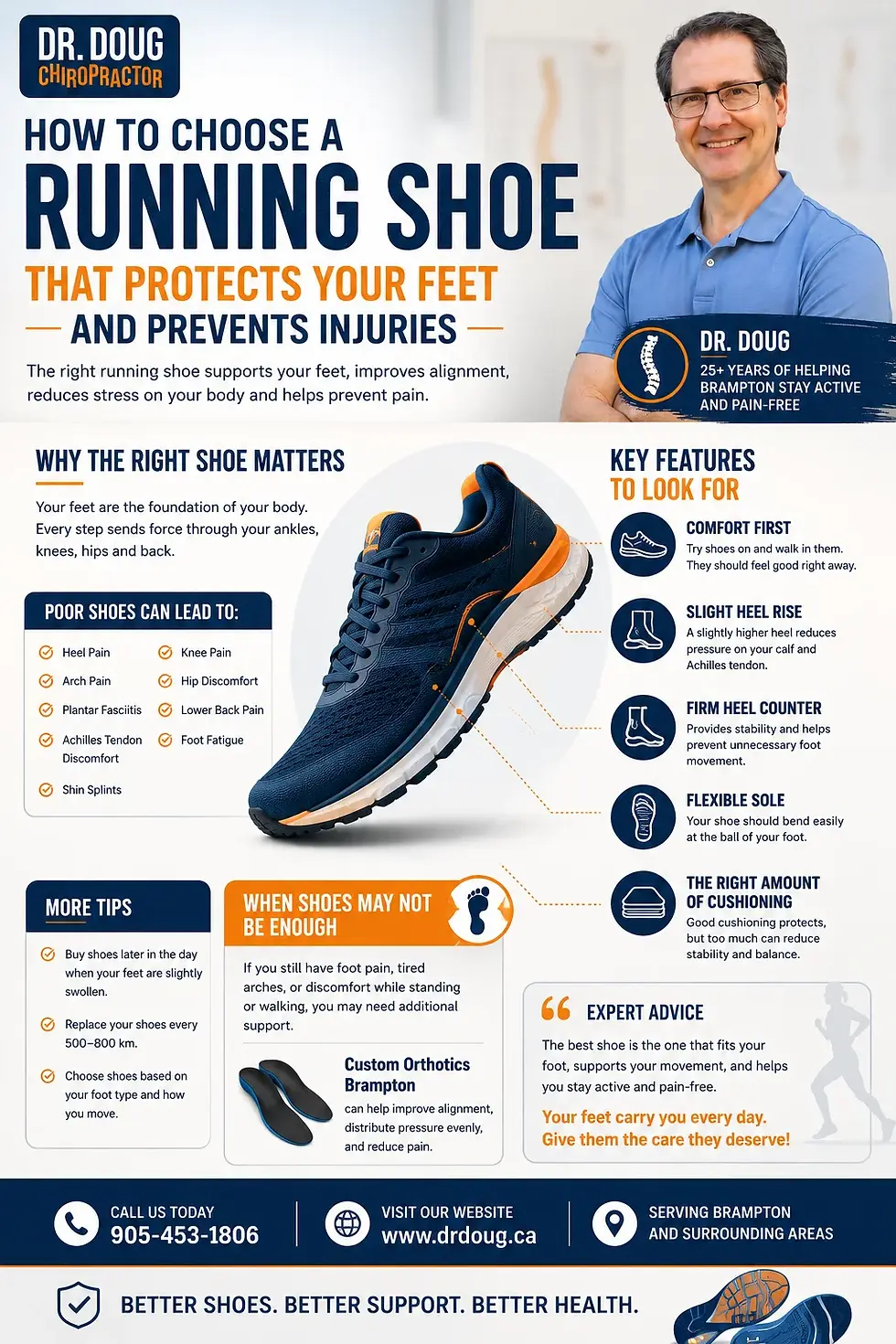
How To Choose a Running Shoe
Most people who wear running shoes don’t use them for running. Running shoes are designed mostly to reduce impact on the foot and, therefore, the whole body. This also makes them good for standing and walking. Running shoes have many features, but what actually helps your feet, and what do you really need?
Many people choose to purchase running shoes because they're suitable for daily activities. Workers in the field of healthcare, retail workers, warehouse workers, educators, or anyone else who spends all day in their shoes often opt for running shoes due to their cushioning and stability when walking or standing. But comfort is not the only factor.
Is More Cushioning Always Better?
Many shoe advertisements promote maximum cushioning as the answer to every foot problem. While cushioning certainly has benefits, more isn't always better.
Many people like the feel of a cushiony shoe. Shoe companies notice this and have even gone as far as to add memory foam insoles to their shoes. The problem is, you can have TOO MUCH cushioning, and this can cause new problems for you. Our bodies have become adapted to take in impact information and relay that to the brain to help stabilize our lower joints via muscle reaction. With too much cushioning below the foot, this information is lost, and the ankle becomes less stable as a result. Also, the body receives less information about where your foot is in relation to the rest of your body and may not respond correctly, especially if there is a need to react to a slight loss of balance. Some studies show that with softer-soled shoes on, people will actually hit the ground with greater forces to compensate, losing the supposed benefit of the shoe.
Your nervous system constantly gathers information from your feet. This feedback helps maintain balance, coordination, and proper muscle activation. In addition, shoes that are too soft can reduce the important sensorimotor feedback.
The objective isn't only choosing the softest shoe. It's about finding the right shoe to provide even support and allow your feet to move normally.
Features to Look for in a Running Shoe
Not all expensive running shoes are the right fit for your feet. Instead, focus on several important characteristics.
Comfort Comes First
So, what features should you look for in running shoes? First, overall comfort when you put the shoe on. There is a lot of variety in the shape and proportion of shoes, so spend some time walking in them at the store.
Never assume a shoe will "break in" later.
If you feel uneasy during the first stroll in the shop, you're not likely to see it get substantially better with time.
Look for a Slight Heel Rise
Next, the heel should be slightly higher than the front of the shoe. This helps to take pressure off the calf and Achilles tendon. People who experience plantar fasciitis find this more comfortable, too. A small heel-to-toe drop could reduce the stress on particular tissues and make running and walking more enjoyable for many people.
A Firm Heel Counter Matters
Next, give the heel of the shoe upper a squeeze. It should be firm, helping to hold your foot properly in the shoe. The heel counter helps stabilize your rear foot and prevents unnecessary movement that may contribute to discomfort.
Check Sole Flexibility
Last, bend the toe of the shoe up. It should bend, but without bending the middle part of the sole, also. This indicates a firm sole, which helps with the stability of the shoe and, therefore, your foot. With these features, you get enough support from the shoe; it likely will have less excess cushioning.
A shoe should flex where your foot naturally bends, not through the middle, where stability is important.
Why Everyone's Feet Are Different
No two people walk the same way.
Some individuals naturally roll their feet inward, while others place more weight on the outside of the foot.
Some have high arches; others have flatter feet.
Your ideal shoe depends on your unique movement pattern rather than current footwear trends.
This is the reason a professional gait assessment from a chiropractor in Brampton is often a valuable resource prior to deciding on shoes or other assistance.
When Running Shoes Alone Aren't Enough
Even the best running shoe cannot correct every foot problem.
If you continue experiencing discomfort despite wearing supportive footwear, your feet may need individualized support.
If you find you still have foot, ankle, or leg pain, getting an assessment of your feet and how they move while walking is useful. You might need to add a custom orthotic to the shoe to add any additional support that YOUR foot needs. Ask about getting an orthotic examination.
Custom orthotics are made specifically for your feet, rather than using a one-size-fits-all approach.
What Are Custom Orthotics?
Custom orthotics are devices created by analyzing how feet perform when standing or moving.
In contrast to the generic inserts available, customized orthotics are designed especially for the foot's shape and movements.
Depending on your individual needs, they may help:
Improve foot alignment
Support the arches
Reduce excessive pressure
Improve walking mechanics
Increase comfort during daily activities
Reduce stress on knees, hips, and lower back
For many patients, the combination of supportive shoes and custom orthotics can provide better comfort over time than simply changing their shoes.
Who May Benefit from Brampton Orthotics?
Custom orthotics are recommended for patients suffering from:
Plantar fasciitis
Heel pain
Flat feet
High arches
Achilles tendon discomfort
Shin splints
Bunions
Metatarsal pain
Knee pain related to foot mechanics
Standing fatigue
Sports-related foot discomfort
A thorough assessment will help to determine if orthotics are suitable for your needs.
Why Professional Assessment Makes a Difference
Shopping for shoes solely based on reviews online or suggestions from family and friends isn't a good way to assess the biomechanics specific to you.
A professional foot examination typically evaluates:
Walking pattern
Foot alignment
Joint mobility
Muscle balance
Arch height
Pressure distribution
Previous injuries
Lifestyle demands
These studies help decide the extent to which changes in footwear, exercises, and custom orthotics could prove beneficial.
Experience Matters
Dr. Doug Has Been Fitting Custom Orthotics For Over 20 Years!
Years of experience in the field allow health professionals to assess the complicated relationships between your feet, hips, ankles, knees, and back. Instead of simply treating discomfort, an extensive evaluation focuses on identifying and addressing the root of your problem, and the recommendations will be specifically tailored to meet your demands.
No matter if you are to run longer distances, stand comfortably in your office, return to activities you enjoy, or walk around without discomfort, choosing the appropriate shoes and gaining expert advice will make a significant change.
Take the Next Step Toward Healthier Feet
Persistent foot, ankle, or knee problems should never be overlooked. A prompt diagnosis can help avoid small issues from developing into long-term issues.
If you're not sure if your shoes are providing the proper support that your feet require and you'd like to know if Custom Orthotics Brampton is right for you, make an appointment for a thorough assessment now. A combination of comfortable footwear, personalized attention, and properly fitting Brampton Orthotics can help you get more comfortable, remain active, and safeguard your feet over the years.
Call us at: 905-453-1806 - Ask for Dr. Doug!
Book online: Online Booking
Email us at: info@drdoug.ca
Visit our website: www.drdoug.ca
Frequently Asked Questions
How long should running shoes last?
The majority of running shoes are able to last between 500 and 800 miles of use. However, longevity varies according to the body's weight, level of activity, and the surface on which you are walking.
Can walking shoes replace running shoes?
A lot of people will find that high-quality running shoes are ideal to walk in because they offer comfort and cushioning. The best option is based on the level of your exercise as well as your foot mechanics.
Are custom orthotics only for athletes?
No. People who have to stand all day at work, walk a lot, and cope with persistent foot pain could get custom orthotics.
Will orthotics fit inside running shoes?
Modern running shoes include removable insoles. This allows the creation of custom orthotics that fit perfectly, provided they are determined.
Do orthotics weaken the feet?
No. Correctly designed orthotics can correct abnormal motion patterns and allow your feet to work efficiently. They're often used in conjunction with exercises for strengthening and mobility as needed.


Comments